

I’m with the Band:
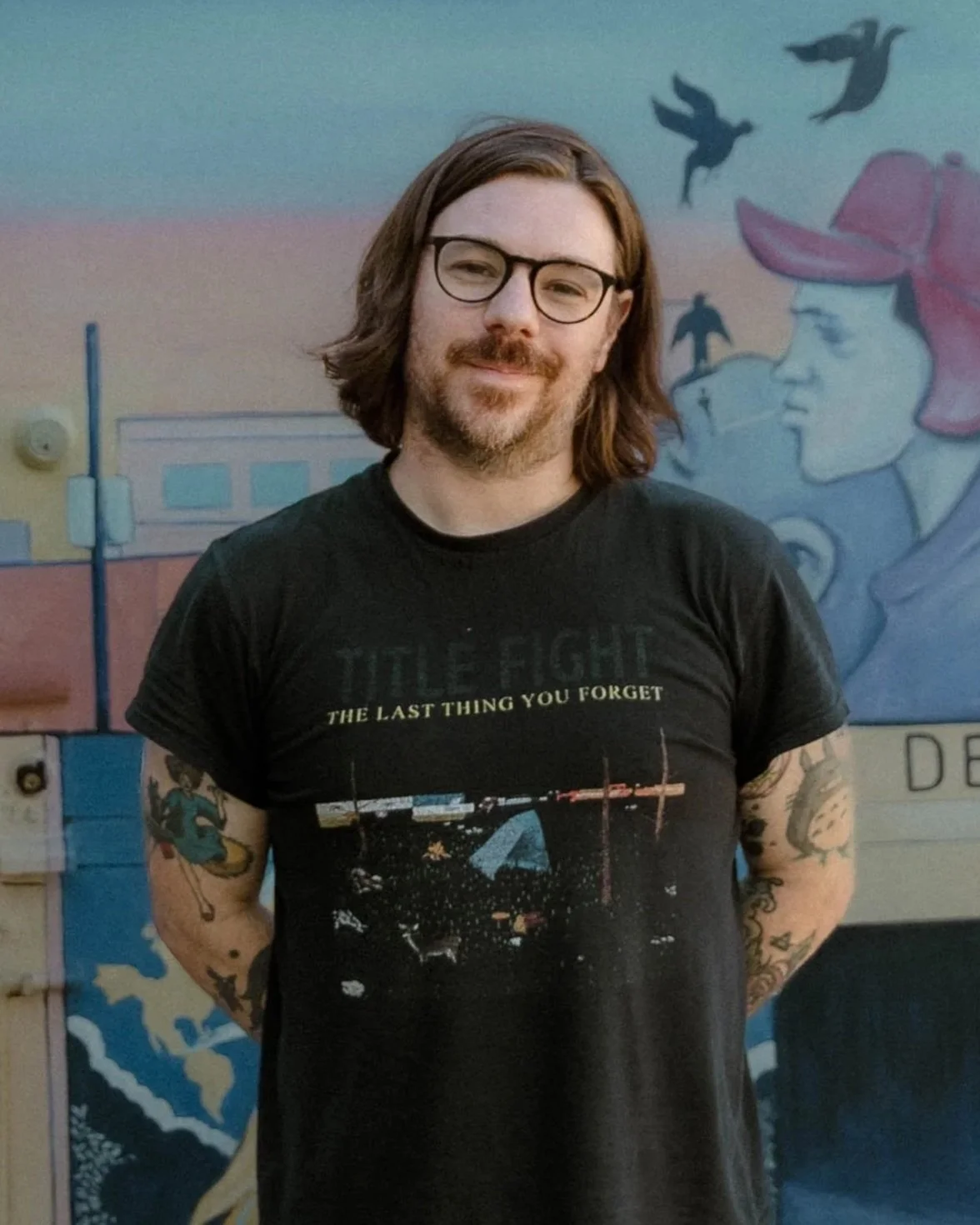
Kurt Travis
“Anywhere is better without me.”
November 15, 2026 (~8 to 9 minute read)
Editor's note: This interview has been edited for length, flow, and clarity.
Every artist has their own creative process. Think of it like a thumbprint. They are never the same, and that’s what I found in my conversation with Kurt Travis.
On November 10th, Kurt and I sat down and chatted about so much while sipping on an Americano and a caramel latte from Merit Coffee down in Deep Ellum, Dallas.
We celebrated the release of the newest album, Anywhere’s Better, and his tour. We talked about almost every aspect of an artist’s process, even acknowledging how important those parts that don’t make it into the final product are. The second guessing, unfinished ideas, and small parts of songs pieced together like Frankenstein – it’s incredible how some artists can navigate through it so gracefully, but others can take years before their projects finally fall into place as they were meant to.
Anywhere’s Better is both for Kurt Travis.
When discussing and breaking apart how Kurt arrived at the final album, we went back to when the project started, 2020. Anywhere’s Better is not new material. It’s a collection of songs brought together over seven years. Pieces here. Pieces there. Kurt talked about how it was so much more than solo work. Collaboration is an absolute necessity. The album needed more than what Kurt wanted to or could do on his own.
There’s trial and error in almost anything anyone ever does. Figuring out when you’re finished is probably one of the hardest things to do when it comes to an artist, especially when we are our own worst critics. Sometimes letting others play a larger role is required, but also requires a whole lot of fucking trust. Kurt crossed that bridge only to find a solid foundation in a team on the other side. He describes himself as the one steering the ship, yet he knows how important it is to have musicians follow their own instincts.
Kurt Travis invited some of his most trusted minds and collaborators over to his house to bring this album to life. His bassist (Steffan from Royal Coda), his guitarist (Jake from Tang), his drummer (Joseph from Royal Coda), and producer (CJ) helped flesh out and collaborate on verses, melodies, and just general ideas for Anywhere’s Better.
“I would let them just cook.” Kurt’s eyes genuinely lit up talking about his bandmates. The house itself also played a role in shaping Anywhere’s Better. Kurt talks about walking into the house the first day, and the vaulted ceilings quickly grabbed his attention. “The house, in my opinion, is another instrument.”
The album was recorded in the living room, surrounded by those vaulted ceilings, a couch, and an electric piano. The room's natural reverberation helped shape the sound. Vocals were recorded with Mike Watts in Long Island, NY.
byQ Media: Fucking looooove Long Island. What part of Long Island were you in?
Kurt Travis: It was Port Jefferson.
byQ Media: They have a good fucking ramen spot.
Kurt Travis: I always get the curry ramen. It’s really good there. It’s like my reward after I’m done recording. :)
Kurt talked about what it was like working with Mike Watts, dropping the names of some of the bands Watts worked with like Glassjaw and Hopesfall. Even though he isn’t credited on the album, Kurt expressed gratitude and considered him a co-writer for the second half of the it.
Kurt Travis pulls from personal experience, 100%. Sometimes, he lives vicariously through someone he loves, or sometimes, he’s empathetically carrying another’s struggles that resonate with him.
byQ Media: One of my corny questions is next. A significant portion of your life has been devoted to music, right? Do you think the kid who started the journey would recognize you right now?
I didn’t get my full question out before Kurt chuckled and said not at all. We talked about what we would say to younger versions of us. Kurt would tell little Kurt to be careful what you wish for. One thing you have to give Kurt credit for is his dedication and commitment to music and his career. He’s been on six different tours in 2026 alone. The conversation started to shift to a personal topic. One that I do not think is acknowledged or discussed enough for touring bands, and that’s just how much personal life one actually misses out on. Kurt talked about how it’s impacted the relationship he has with his family, but stated that it’s a decision he would make in every lifetime.
Kurt Travis: You know I don’t know how long I can dedicate myself to this. But as long as I still have my voice and inspiration, I’ll keep doing it. But it is very scary, there is no fallback. This is it. This is what I do, and it gets less and less scary.
I asked him why Anywhere’s Better was the song to carry the weight as the title for the album. I felt extremely privileged to ask him this question. He thought about it for a second before finally explaining.
Kurt Travis: I think it’s just my own depressive feelings. I can relate to it. It’s so melodramatic. Anywhere is better without me. What I think melodramatic specifically is like ‘nobody likes me.’ I have so many friends, and I have so many people that I love. The feeling is mutual, but even in a crowded room, sometimes, you feel alone, right?
He talked about the stark contrasts of adjusting back to home life, only to leave again.
In my opinion, one specific song, Delete the Message, is a perfect representation of how to apply stark contrast to music. So, I asked Kurt about it. He broke down the bands that were influential in his life, but for this song, he wanted to channel Elliott Smith specifically. Kurt aimed for happy music that complemented sad lyrics.
Kurt Travis: One of the artists that I totally gravitated towards and was just completely fascinated by is Elliott Smith. One of the big things I learned from Elliott Smith was the power behind a major chord progression with minor lyrics. You know what I’m saying? Like to have that contrast of a happy sound song with sad lyrics.
For Kurt Travis, this song was different. Almost every time, he’s drawing from real-life experiences, verbatim. Delete the Message started as only a concept. At first, the song felt like it was about someone overcoming a bad relationship while feeling empowered; however, this idea was not the song's final form or transformation.
Kurt Travis: Then the second verse, I’m realizing “oh my gosh, this person died. That’s why I’m getting through it. That’s why I want to delete the message. I can’t repeat the wreckage. I can’t do this, and I have to move on.
I’m going through this grief, and I’m looking at these things around me. My brain reminds me of this person. I’m never gonna meet another you, but I’m trying to. Because I have to. We are humans who get stuck. If we’re stuck, we don’t process as people. Even when I was writing it, I was bawling my eyes out because I wasn’t even thinking of a specific person. I was relating to a specific experience. Having loss, having somebody you love – they’re gone.
One fascinating part about my conversation with Kurt Travis is learning that Kurt’s songwriting process mirrors my own writing process, particularly when it comes to sensory detail and imagery. Inside Kurt’s mind, everything turns into a Wes Anderson film like at the flick of a switch. When that is flipped on, something as simple as a piece of trash becomes art. Kurt laughs and talks about how beautiful clouds become on a car ride simply because flipping that switch back off can be difficult.
The list of collaborators on Anywhere’s Better grew with the addition of three featured artists: Andy Cizek, Andres, and Cory.
Kurt Travis: I’ve known him forever. I’ve toured with him multiple times… I will collaborate on songs with him; he’ll collaborate with me. It was just natural. [For Watching You Fade] I showed Andres my album with no vocals. I heard him on this song. Literally, the day I wrote it, he was like “let me get on it!” His contribution slaps. So for that song, I think it was meant for Andrés.
Before Entropy (Always Going), Kurt Travis and Andy Cizek hadn’t collaborated, outside of A Lot Like Birds, which Andy is also the vocalist for. Andy Cizek was the perfect addition to this album.
Kurt Travis: I really wanted Andy on this record, and it was just a great way to use him too! He’s incredible too. I have literally NO notes. When he asked what the song was about, I told him it’s sad and is going to be called “Entropy.” It’s about how nothing stays the same, and everything dies and decays. When he sent me his voice, I had zero notes. It was incredible.
The other writer who also worked with Kurt was Cory, even though he’s retired from the music industry. He still became a part of something legendary.
byQ Media: So one of the questions I think you've already answered, but I'm curious. What came first, your solo work or boy bands?
At the age of 17 or 18, Kurt Travis started attending every open mic he could with an acoustic guitar and a friend named Kat. He “cut his teeth on live music” at TruLove, a little punk rock coffee shop owned by one of the band members of Seven Seconds.
Kurt’s advice is simple. He says if you want to make music, you just have to go and do an open mic night. Do as many as you can because there’s no judgement in those kinds of spaces.
Kurt Travis: Everyone wants to be on stage, and everyone gets a turn.
Adam Duritz, from Counting Crows, also played a heavy hand in forming primitive Kurt Travis, especially the album August. Kurt said that he could still quote every single lyric on the spot. Think like indie rock with country twang which wasn’t a popular genre then. He identifies his voice as Bono-boomy, which is great for bands who wanted him as a singer. But sometimes, a dude just wants to only play guitar.
We took a break from talking about Anywhere’s Better to talk a little about his family. To put it simply, Kurt’s entire family is musical. Karaoke after every dinner any time the family gets together. His family also spent many “family nights” at the bowling alley growing up. They did it for fun but also because they always at least had one free game to use. An absolute baller move. There was always an element of competition, too. It was expected that whatever you chose to do, you did it the best you could.
His voice is distinct, but growing up, he never thought of his own voice as “unique.” Everyone around him could sing, so he never thought much of his own voice. The conversation looped back to the boy bands versus solo work question.
Kurt Travis: I feel like the solo music came first and last, you know, because I knew that I needed to establish myself, and a solo artist is so hard to get off the ground. Oh I think that's kind of a natural progression. It's like you got to do your Led Zeppelin first before you collaborate with you know other people, and you can just be Robert Plant. You know what I mean? Or you got to do your Destiny's Child before you can just be Beyonce.
We ended the interview like I do with every single band I interview. I asked my favorite question: if you could be any fruit, which would you be and why? Kurt’s why caught my attention more than his actual answer.
Kurt Travis: Probably a pineapple
byQ Media: A pineapple? Interesting.
Kurt Travis: Well, it's an anti-inflammatory.
It’s true. You really do learn something new every day because I did not know that fact. Kurt says that pineapple is the secret weapon for a vocalist. They’re his “ace in the hole.” I’ve asked many bands this question, but thankfully I have yet to receive the same answer.
My fruit question is absolutely a Dance Gavin Dance reference, but man, I wish I had never asked a former band member of that DGD why they chose to do the fruit thing in the first place. Lol.
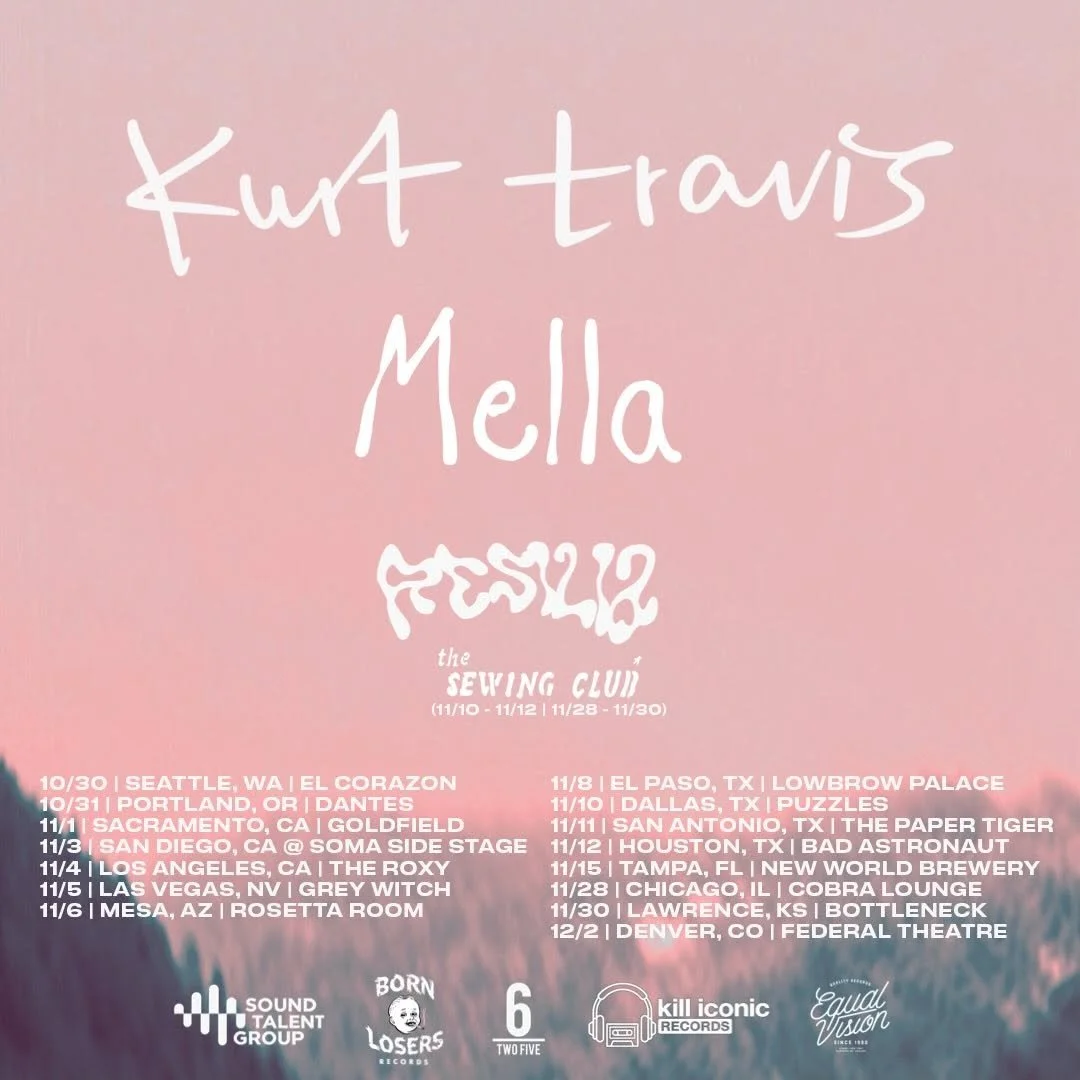
VENDORS TO THANK! VENDORS TO FOLLOW!

Puzzles Deep Ellum
2824 Main Street, Dallas, TX 75226

Merit Coffee
2639 Main St, Dallas, TX 75226
———

Que M. Inwood is an Arkansas-based photographer, writer, editor, and founder of byQ Media, an independent music outlet dedicated to documenting live music, amplifying emerging artists, and telling the stories that exist beyond the stage.
Holding a Master's Degree in Writing from Sarah Lawrence College, Que brings a background in publishing, editorial production, and visual storytelling to their work. Their approach blends documentary photography with thoughtful journalism, capturing not only the energy of live performances but also the people, personalities, and communities that make music meaningful.
Through byQ Media, Que seeks to create a space where artists can be seen and heard authentically. From concert photography and intimate artist interviews to long-form editorial features, their work celebrates the connection between musicians and the audiences who support them.
With a passion for independent music and creative expression, Que believes every artist has a story worth telling—and sometimes the most compelling moments happen when the stage lights go down.